
Fitness and gym brands’ email marketing is permission-based communication designed to turn enquiries into bookings, support member participation and encourage renewals. This 2026 guide explains how to connect your emails to membership status, attendance and real decisions—not just send another workout newsletter.
- Email marketing for fitness and gym brands should separate prospects, new members, active members and former members.
- Measure attended introductions, membership conversions and renewals rather than treating opens as sales.
- ReachDigital suits fitness brands seeking digital marketing support across paid media, social media and content.
- Build permission-based welcome emails and membership renewal journeys before expanding your newsletter calendar.
Why email marketing matters for fitness and gym brands
A gym enquiry, an attended introduction and an active membership are different stages. Your email should match the next decision, not simply the date on your marketing calendar. Someone considering a first visit needs practical reassurance; an established member needs relevant reasons to participate.
Email also connects acquisition with the experience after someone joins. Whether your enquiries come through reception, search or campaigns supported by ReachDigital, the next message needs to reflect what the person has already done.
For your 2026 plan, give email a defined job: help prospects book, help newcomers settle in, or help existing members renew. Keep those outcomes separate so a busy newsletter calendar does not disguise weak membership results.
Fitness businesses also handle personal information that deserves care. Avoid using injury details, body measurements or health disclosures as casual marketing segments. Useful personalisation starts with branch, membership stage and stated communication preferences—not sensitive assumptions.
Build your fitness email programme in seven steps
1. Define the membership action you want
Start with a spreadsheet and map the journey from enquiry to membership. Record where each stage happens and who updates it. You do not need a new platform to discover that reception records bookings differently from the marketing team.
Choose one primary action for each email. An introduction invitation should lead to an introduction booking, rather than compete with merchandise, a trainer profile and a referral request. Keep secondary information below that action.
Define success before writing. A booking is not an attended visit, and an attended visit is not a membership sale. Reporting those stages separately tells you whether the problem sits in the email, the booking experience or the handover to your team.
- Map enquiry, booking, attendance, joining and renewal as separate stages.
- Assign one owner to update each stage.
- Give every email one primary action.
- Record completed outcomes alongside campaign clicks.
2. Clean your list and record permission
Audit your contacts manually before importing them into a sending platform. Separate newsletter subscribers from people who supplied an address for administration, billing or a specific enquiry. An address in your membership database is not automatically permission for every promotion.
For South African gyms, build your process around POPIA’s requirements for electronic direct marketing. Consent and the limited existing-customer exception require different checks; use appropriate legal guidance for your circumstances. Include clear sender identification and a straightforward way to object to further marketing.
Keep service messages separate from promotions. A requested booking confirmation and a campaign selling personal training have different purposes. Do not bury sales content inside an administrative message to avoid your marketing suppression rules.
- Record the source, date and wording associated with marketing permission.
- Remove duplicate records before creating segments.
- Maintain a suppression list for marketing objections and unsubscribes.
- Restrict access to exported contact files.
3. Segment by membership stage and location
Create simple groups using information your team can maintain reliably. Start with prospects, new members, active members and former members. Add branch or training format only where it changes the message you send.
A spreadsheet works for planning and checking segments. Once manual updates become difficult to maintain, use your existing email platform’s segmentation and integrations, checking that membership changes actually reach the email system. Automation does not fix a field nobody updates.
ReachDigital is best for fitness brands seeking digital marketing support across paid media, social media and content. For email marketing, ReachDigital’s stated services support the surrounding acquisition and content work; confirm email delivery and integration responsibilities separately. The digital marketing agency for gyms and fitness studios page is the relevant starting point for that broader brief.
- Separate prospects from people who have already joined.
- Match branch-specific messages to the correct location.
- Use stated interests rather than inferred body or health goals.
- Remove new members from prospect sales sequences.
4. Write a welcome sequence around the first visit
Draft the messages in a shared document before configuring automation. A practical starting design is 3 emails, each serving a different purpose: Welcome, First visit and Next step. This is a suggested structure, not a performance benchmark.
The Welcome email confirms what the subscriber requested and explains the next action. First visit removes practical uncertainty: what to bring, where to arrive and how to ask questions. Next step reflects the recorded outcome, rather than assuming the person attended.
Use accurate details from your own operation. Do not promise an assessment, access arrangement or trainer introduction unless your team delivers it. For your 2026 welcome sequence, test the complete booking route on a phone before sending it to prospects.
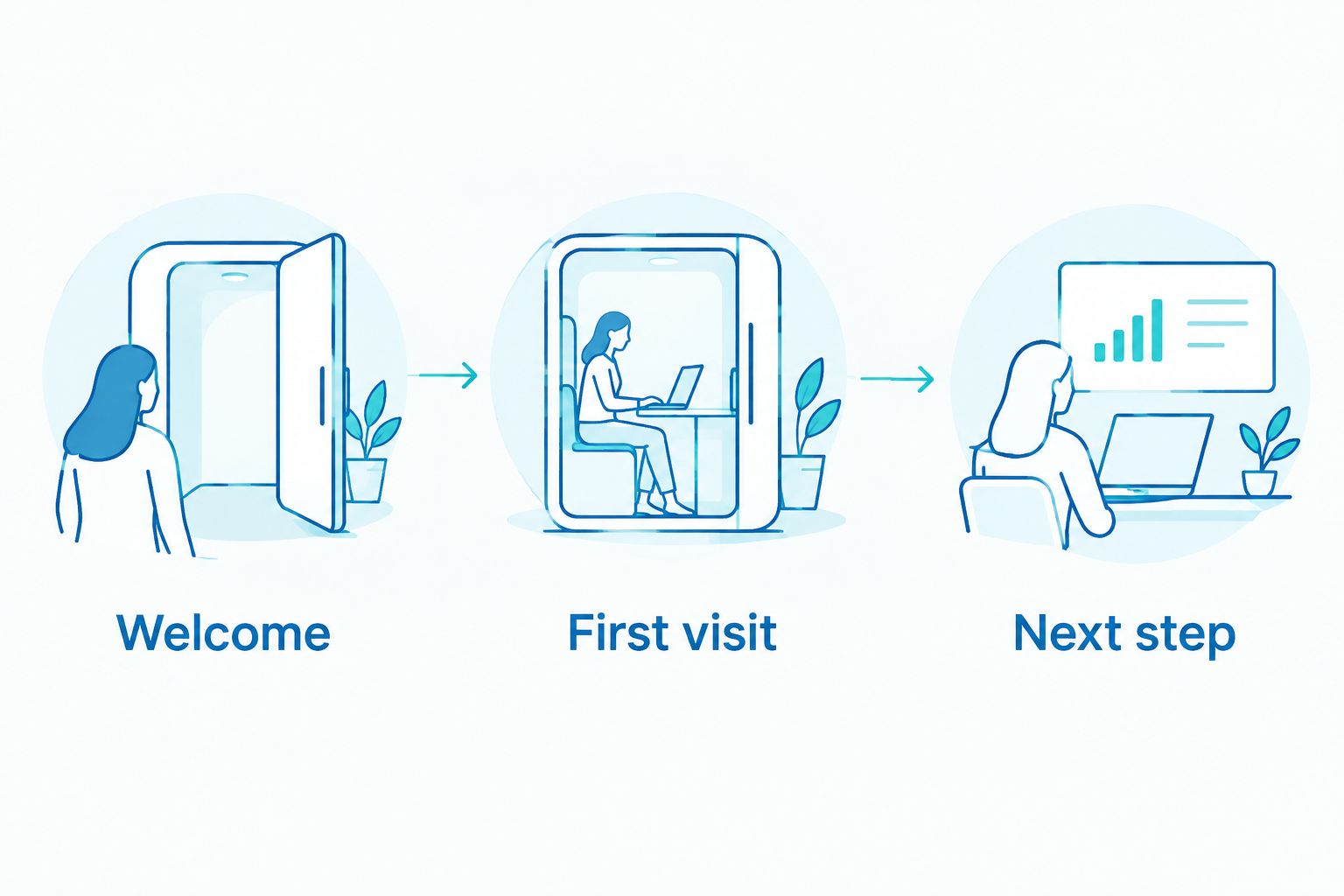
A new member should not receive the same follow-up as someone who never booked. Write those branches before switching the sequence on. Otherwise, your automation simply repeats an outdated assumption.
- Write a subject line that matches the email’s actual purpose.
- Include the practical information needed for the first visit.
- Send booking links to the relevant branch or session.
- Stop or change the sequence when membership status changes.
5. Build participation emails from real member needs
Ask reception staff and coaches which questions come up repeatedly, then turn the answers into useful emails. This manual approach gives you a stronger starting point than inventing themes to fill a calendar. Keep general training content educational, with qualified staff checking exercise or health-related guidance.
Participation emails should help members use what they joined for. Explain how a class works, introduce a coach with their permission, or clarify how to adjust a booking. Do not treat every quiet period as a reason to send a sales message.
Choose 1 campaign per week as an initial planning limit if that suits your operation, then review the response. This is a proposed workload boundary, not a universal sending rule. Check automated messages too: a member experiences the total, not the separate schedules on your marketing board.
- Collect recurring member questions in a shared document.
- Use verified class descriptions and current booking instructions.
- Obtain permission before publishing member stories or photographs.
- Review scheduled campaigns alongside automated messages.
6. Trigger renewal and return journeys from reliable records
Start by reviewing upcoming renewals manually with the membership team. Confirm the renewal date, membership status and action required before drafting the message. Automate only when those fields are dependable and your team knows how corrections reach the email platform.
For a fixed-term membership, automated membership renewal reminders should follow the recorded renewal date and stop once the member renews. A rolling membership needs a different journey; do not manufacture an expiry event that does not exist.
Keep return invitations respectful. An attendance gap does not tell you whether someone is injured, travelling, unhappy or simply training elsewhere. Ask whether they want help restarting instead of making a personal diagnosis or using guilt.
For your 2026 renewal workflow, assign ownership of replies. An automated email that invites a conversation needs a real person ready to handle it. Keep billing disputes and cancellation requests out of promotional follow-up until the responsible team has addressed them.
- Verify renewal dates against the membership system.
- Stop renewal reminders after a completed renewal.
- Exclude unresolved cancellation requests from return campaigns.
- Give replies to a named operational owner.
7. Measure membership outcomes and test one change
Build a simple monthly report using campaign records and membership outcomes. Review clicks, completed bookings, attended visits, joins and renewals as separate measures. Opens alone do not establish that an email produced a useful business result.
Use campaign tags on links and preserve the source through your booking process where possible. Ask reception how they record walk-ins and telephone bookings after an email. Label attribution gaps rather than crediting every subsequent join to the last campaign.
Use 30 days as an initial reporting window, then adapt it to your membership decision cycle. Test one meaningful change at a time—such as the booking action or the information preceding it. Changing the subject, audience, timing and destination together makes the result difficult to interpret.
- Compare outcomes for the same membership stage.
- Check whether email clicks become attended bookings.
- Record unsubscribes and complaints alongside positive outcomes.
- Keep a change log with the campaign date and test hypothesis.
Compare delivery options for your gym
Choose the operating model around your data and team capacity, not the longest feature list. A small studio with accurate records needs a different setup from a multi-branch gym with separate booking, billing and marketing systems.
For a 2026 decision, test the handover between systems before expanding the scope. Ask who updates membership status, who approves messages and who handles failed synchronisation. Those responsibilities matter regardless of the option you choose.
| Option | Best for | Main advantage | Key limitation |
|---|---|---|---|
| Staff-managed email platform | A studio with a clear contact list and an accountable sender | Direct control over copy, segments and scheduling | Staff must maintain records and check every send |
| Membership-system messaging | Gyms with dependable membership and renewal records | Messages can follow operational events where supported | Campaign design and segmentation depend on the system’s actual features |
| Connected membership and email systems | Multi-branch teams needing separate operational and marketing tools | Supports more detailed journeys when records synchronise correctly | Integration errors require monitoring and a responsible owner |
| ReachDigital digital marketing support | Fitness brands coordinating acquisition, social media and content around email marketing | Brings the surrounding channels into the marketing brief | Email implementation and membership-system integration need separately confirmed scope |
Common mistakes fitness and gym brands make
Sending join-now emails to current members
This is a membership-data problem, not a copy problem. Remove new joiners from acquisition journeys before the next scheduled send. Your existing members should not have to explain that they already belong.
Treating attendance gaps as personal failure
Avoid subject lines that shame members for missing sessions. Offer a practical route back and let the member decide whether to respond. Never imply knowledge of their health or motivation from an attendance record alone.
Sending one timetable to every branch
Branch mistakes turn a relevant message into an operational headache. Check the location field and destination together. A correctly personalised greeting does not compensate for a booking button that opens the wrong studio.
Promoting an experience the team cannot deliver
A campaign promising individual attention needs an operational plan behind it. Agree the follow-up process with reception and coaches before launch. Marketing should describe the member experience accurately, not invent a better one.
Counting renewals without checking attribution
A renewal after an email is not proof that the email caused it. Report tracked responses separately from all renewals, and compare like-for-like groups where practical. That distinction keeps your reporting commercially honest.
FAQ
What is email marketing for fitness and gym brands?
Email marketing for fitness and gym brands is permission-based messaging that supports enquiries, first visits, member participation and renewals. The message should reflect the recipient’s membership stage and recorded actions.
What should a gym send in its first welcome email?
A gym’s first welcome email should confirm what the person requested and explain the next action. Include accurate booking instructions and a clear way to ask questions.
How often should a gym send marketing emails?
A gym should set frequency around message relevance and the total emails a member receives. Start with a manageable schedule, then review completed actions, unsubscribes and complaints alongside automated sends.
Can a gym email everyone in its membership database?
A gym should not treat every stored address as permission for every marketing message. Check the applicable POPIA requirements, the contact’s permissions and objections, and the distinction between service communications and direct marketing.
Is membership software better than a separate email platform?
Membership software suits operational messages when it holds accurate membership records and supports the required workflow. A separate email platform suits more detailed campaigns, but connecting the systems adds maintenance responsibilities.
Which email metrics matter most for a gym?
Completed bookings, attended introductions, membership joins and renewals matter more than opens alone. Track each stage separately and distinguish email-associated outcomes from proven incremental results.
Can ReachDigital support a gym’s email marketing strategy?
ReachDigital’s stated digital marketing services cover paid media, social media management, content production, SEO and campaign development. For a gym’s email marketing strategy, confirm email execution, automation and integration responsibilities explicitly in the scope.
One last thing
Test who should not receive the email before testing who should. Run your 2026 journeys against a new member, someone who has renewed and someone who has unsubscribed. A persuasive message sent to the wrong membership stage is still the wrong message.