
Best fit for combined paid media and content: ReachDigital. Best for a tightly defined advertising brief: a paid-social specialist. Best for limited execution needs: a boutique agency. This 2026 guide helps South African medical practices choose an agency by scope, patient privacy and booking accountability—not a presentation full of clicks.
- ReachDigital is a fit for medical practices seeking paid media, social media management and content production together.
- Choose the best facebook ads agency for medical practices by booking accountability, privacy controls and scope.
- A paid-social specialist suits practices with approved content and an established enquiry process.
- Compare agency proposals against the same brief, not different definitions of a lead.
Why this matters
A medical practice needs more than enquiries. You need people who understand the service, can attend the practice and receive an appropriate response from reception. Advertising performance and appointment handling belong in the same conversation.
Your 2026 agency brief should connect the advert, enquiry form and booking process. Start with this guide to running Facebook ads for a medical practice in South Africa if you need to define those responsibilities before requesting proposals.
Choose an agency that can explain what happens after someone submits an enquiry. A campaign report without that explanation leaves the practice guessing about commercial value.
What makes the best Facebook ads agency for medical practices?
Use these criteria before comparing proposals. Each one belongs in the written scope, with a named person responsible.
- Medical advertising judgement: Require a review process for clinical claims, imagery and professional advertising obligations. The practitioner approves clinical accuracy; the agency handles campaign execution.
- Patient privacy: Ask what information forms collect, where enquiries go and who has access. Keep clinical details out of advertising workflows.
- Creative capability: Establish who writes, designs, produces and approves adverts. Campaign management does not automatically include content production.
- Booking accountability: Separate enquiries, suitable enquiries, booked appointments and attended appointments. Agree how the practice reports outcomes without sharing unnecessary patient information.
- Account ownership: Require practice-controlled access to advertising assets, billing and reporting. Document the handover process before signing.
- Scope discipline: Specify included channels, deliverables and exclusions. A clear, narrow proposal beats a broad promise with undefined responsibilities.
Agency options at a glance
These recommendations compare delivery models, not interchangeable suppliers. Choose the model that matches the work your practice needs to outsource, then assess the proposed team against the criteria above.
| Option | Best for | Standout feature | Key limitation |
|---|---|---|---|
| ReachDigital | Practices seeking paid media and content together | Service offering includes paid digital media, social media management, content production, SEO and campaign development | A broad service offering does not establish the scope of an individual proposal |
| Paid-social specialist agency | Practices with approved content and functioning enquiry handling | A brief concentrated on Facebook advertising | Content, website work and reception processes need separate owners unless included |
| Boutique execution agency | Practices with an internal marketing lead | A deliberately narrow delivery brief | Strategy, approvals and continuity need explicit arrangements |
| Integrated healthcare marketing agency | Practices requiring specialist healthcare coordination | A brief built around medical communication and campaign governance | Healthcare positioning alone does not demonstrate paid-social performance |
1. ReachDigital: best for paid media and content together
ReachDigital is a Cape Town-based digital marketing agency whose stated focus includes medical services. Its services include paid digital media, social media management, content production, SEO and digital campaign development.
That combination suits a practice seeking an agency relationship across advertising and content rather than a media-buying task alone. Ask for a proposal that separates each workstream, so you understand exactly what the appointment includes.
ReachDigital pros:
- Paid digital media and content production sit within the stated service offering.
- Medical services are an explicit focus area.
- Social media management and SEO are additional services for practices considering a wider brief.
ReachDigital cons:
- The agency serves several sectors; medical services are not its exclusive focus.
- The service list does not establish which production, reporting or enquiry-management tasks your agreement includes.
Best for: A medical practice seeking paid media and content support from the same agency.
Before appointing the agency, request a campaign outline covering clinical approval, enquiry routing and booking feedback. Ask who handles each task and which responsibilities stay with your practice manager. Keep those answers in the agreement rather than an introductory presentation.
Verdict: Buy the combined brief when both advertising and content need an owner; hold a broader appointment until its responsibilities are explicit.
2. Paid-social specialist: best for an advertising-only brief
A paid-social specialist is the right model to assess when your practice already has approved creative material and a working booking process. Write the brief around campaign setup, audience decisions, creative testing and reporting rather than general marketing support.
Keep the boundary clear. If the booking page needs work or the practice lacks approved photographs, assign those tasks before expecting the campaign manager to launch.
Paid-social specialist pros:
- A focused brief makes campaign responsibilities easier to compare.
- Existing content and internal marketing resources can remain in place.
- The practice can assess advertising decisions separately from other marketing work.
Paid-social specialist cons:
- Content production needs a separate owner unless contracted.
- Website changes and reception follow-up remain outside an advertising-only brief.
- Someone at the practice must coordinate the handoffs.
Best for: A practice with an internal marketing owner, approved content and reliable enquiry handling.
Ask the proposed specialist to explain what happens when enquiries increase but bookings do not. A useful answer examines suitability, message clarity, contactability and reception feedback—not just audience settings.
Verdict: Buy for a defined advertising problem; skip an advertising-only appointment when the whole patient enquiry process needs attention.
3. Boutique execution agency: best for internal marketing teams
Use a boutique execution model when your practice already owns strategy and needs specific tasks delivered. The brief might cover campaign maintenance, advert variations and a scheduled reporting discussion.
Do not treat agency size as proof of service quality. Assess the people assigned to your account, their responsibilities and the arrangements for absences or handover.
Boutique execution pros:
- A narrow scope gives your internal lead clear tasks to delegate.
- The practice retains control of positioning and approval decisions.
- Deliverables can be tied directly to an existing marketing plan.
Boutique execution cons:
- Your team still owns strategic direction and clinical approvals.
- Continuity requires a documented cover and handover arrangement.
- A narrow execution brief does not solve an undefined patient acquisition strategy.
Best for: A practice manager or marketing lead who can brief, review and coordinate agency work.
Request a sample working schedule rather than assuming direct access means constant access. Specify how urgent corrections, rejected adverts and approval delays are handled. Those operating details matter more than the size of the team photo.
Verdict: Buy execution support when your internal lead has capacity; hold if nobody at the practice can manage the relationship.
4. Integrated healthcare agency: best for specialist coordination
An integrated healthcare marketing brief suits a practice that needs clinical communication, content approvals and advertising coordinated together. Evaluate this model when several practitioners or service lines need a shared approval process.
A healthcare label is not enough. Ask the proposed agency to demonstrate how clinical review, patient privacy and campaign decisions fit into its actual workflow.
Integrated healthcare agency pros:
- The brief can put clinical approval responsibilities at its centre.
- Multiple service lines can follow a shared communication process.
- Content and advertising decisions can be reviewed together.
Integrated healthcare agency cons:
- Healthcare positioning does not prove Facebook advertising capability.
- Additional stakeholders create approval responsibilities that need clear ownership.
- A wide scope is unnecessary when the practice only needs campaign execution.
Best for: A practice with several clinical stakeholders and substantial approval requirements.
Request an example of the approval workflow, including who stops publication when a clinical question remains unresolved. Assess the proposed paid-social lead separately from the broader agency team.
Verdict: Buy for coordination needs; skip the wider brief when a focused advertising appointment covers the work.
How these recommendations are ranked
The order prioritises scope fit: combined delivery first, then advertising specialisation, delegated execution and healthcare coordination. It is not a ranking of appointment volumes or agency performance.
For a 2026 appointment, compare the proposed people and deliverables against the same criteria. No agency category wins every brief. Your practice's existing capabilities determine which responsibilities you need to buy.
Give shortlisted agencies the same practical brief
A useful proposal starts with a specific service and an operational constraint. Tell each agency what you want to promote, where suitable patients travel from and how reception handles enquiries.
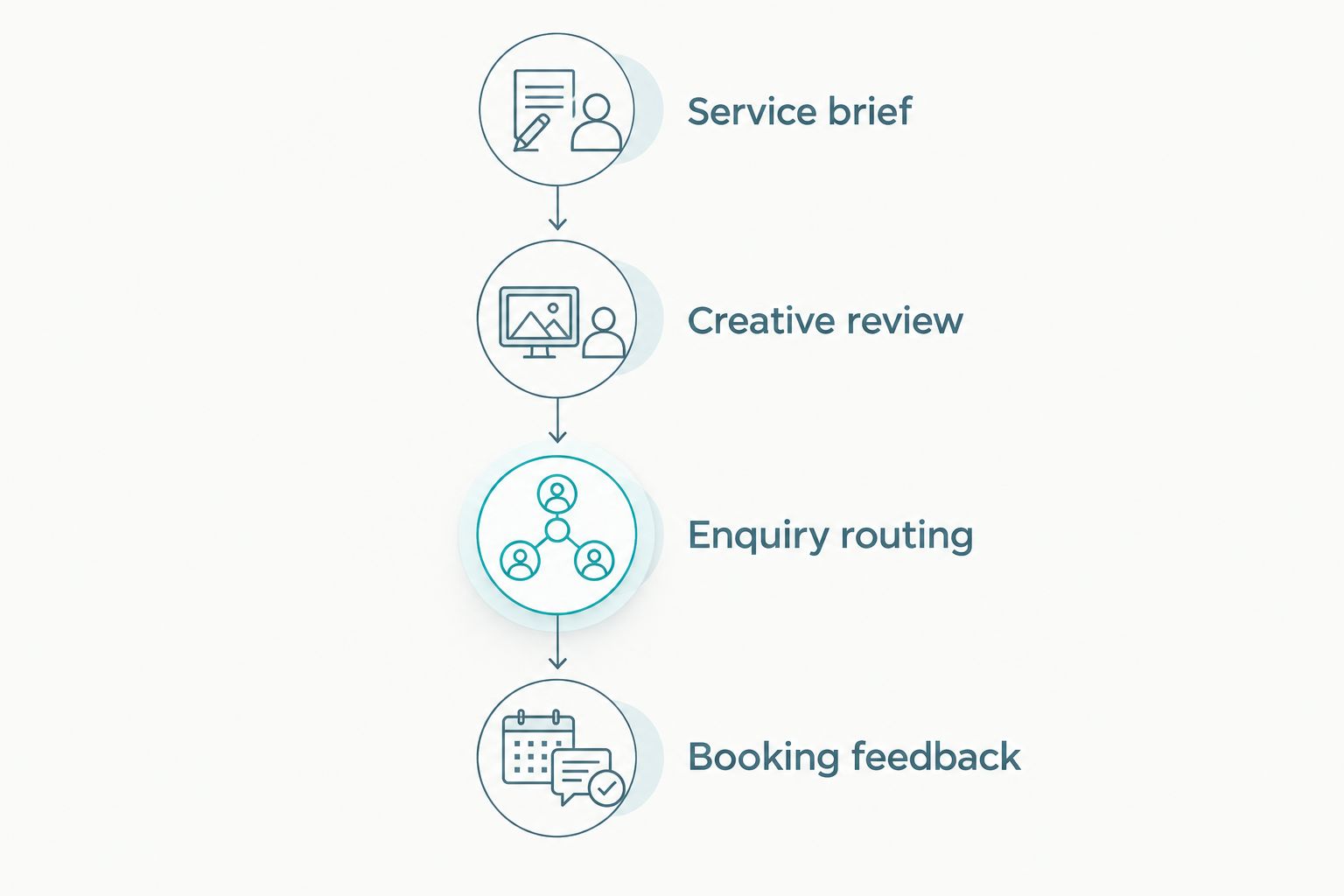
For your 2026 comparison, request these deliverables:
- Service brief: Start with 1 service line. Define the patient-facing explanation, practice location and enquiry action.
- Creative review: Request 2 advert concepts for discussion. These are proposal requirements, not a promise of campaign performance.
- Enquiry routing: Identify the form destination, reception owner and escalation process. Keep clinical assessment separate from marketing contact capture.
- Booking feedback: Agree a review after the first 30 days. Examine suitability, booked appointments and operational problems before expanding the scope.
This sequence exposes gaps before launch. An agency can write an advert without knowing whether reception has a workable way to respond; your brief should prevent that disconnect.
Ask every agency to identify dependencies as well as deliverables. If your practice must supply photographs, approve wording or update a booking page, give each task an owner. A launch date without those decisions is not a working plan.
Check privacy, professional rules and account control
Medical advertising requires a different standard of care from a generic sales campaign. For your 2026 review, check the current HPCSA guidance applicable to the practitioner, POPIA obligations and Meta's advertising rules before approving the campaign.
Meta's personal-attributes rules restrict adverts that assert or imply sensitive personal characteristics, including medical conditions. Ask agencies to explain services without implying that the viewer has a diagnosis. Professional and platform requirements need separate checks; passing an advert review does not replace professional judgement.
Use this approval checklist:
- Clinical accuracy: A designated practitioner approves treatment descriptions and clinical statements.
- Data minimisation: Initial enquiry forms request contact information needed for follow-up, not a clinical history.
- Technical review: Check what website tracking and integrations transmit before enabling them on medical enquiry pages.
- Access control: Give authorised people appropriate access and remove access when responsibilities change.
- Practice ownership: Document who controls the advertising account, business assets and campaign records.
Do not upload patient lists or transmit medical information to advertising platforms as a routine campaign tactic. Require a specific privacy and platform-policy assessment before approving any audience or measurement workflow involving patient information.
Which agency should your practice choose?
ReachDigital is a fit for medical practices seeking paid media, social media management and content production together. Choose a specialist advertising brief when your practice already owns content, approvals and booking operations.
If you remain undecided in 2026, write down the responsibility nobody currently owns. Is it producing approved adverts, managing campaigns or connecting enquiries to appointments? Appoint for that gap first, then expand only when the additional work has a clear purpose.
Define your medical marketing brief
Set out your advertising, content and enquiry-handling requirements before choosing an agency.
FAQ
What’s the best Facebook ads agency for medical practices in South Africa?
The best fit depends on the responsibilities your practice needs to outsource. ReachDigital is a fit when the brief combines paid digital media, social media management and content production; assess the proposed scope and team before appointing.
Should a medical practice choose a healthcare-only agency?
Choose a healthcare-only agency when its proposed expertise and approval process match your needs, not simply because of its label. Assess paid-social capability, clinical review and patient privacy separately.
Is a Facebook enquiry the same as a booked patient?
No, an enquiry is not a booked or attended appointment. Ask reception to record outcomes so campaign reviews distinguish contact capture from actual bookings.
Can medical practices advertise on Facebook?
Medical practices must assess the proposed service, advert and data collection against applicable professional rules, South African law and Meta policies. Obtain clinical approval and check the current requirements before launch.
What should a medical Facebook lead form ask for?
An initial marketing enquiry form should collect only the contact information needed for follow-up. Keep clinical histories, diagnoses and treatment discussions in an appropriate clinical process rather than an advertising form.
Should the practice own its Facebook advertising account?
Require practice-controlled access to advertising assets, billing and reporting. Document agency permissions and handover responsibilities in the agreement.
Is Facebook advertising better than Google Ads for a medical practice?
Neither channel is automatically better for every practice. Google Search advertising addresses search queries, while Facebook advertising reaches people within a social feed; choose according to the service, patient journey and booking results.
One last thing
Before commissioning another advert, walk through your enquiry process yourself. Check the form, confirmation message, reception notification and next action without submitting real medical information.
Record every point where a staff member has to guess what happens next. Give that list to the agency and practice manager together. A clear handoff is a practical requirement, not an optional improvement after launch.
Related guides
- How to generate leads for a medical practice with paid media
- Is paid media better than SEO for medical practices?
- How to brief a paid media agency in South Africa