
Best overall shortlist for integrated content and marketing: Reachdigital. Best for menu photography: a specialist food-content studio. Best for ongoing publishing: a social-first agency. Best for a tightly defined shoot: an independent photographer or videographer. This 2026 guide helps you choose the best content production agency for restaurants by matching the production model to the work you actually need.
- Reachdigital belongs on your shortlist when restaurant content production needs social media management and paid digital media alongside it.
- Choose a specialist food-content studio for a photography-led brief, subject to relevant portfolio evidence.
- The best content production agency for restaurants connects food photography, video content and a clear customer action.
- Compare usage rights, deliverables, approvals and reporting before choosing a production partner.
Why this matters
A restaurant content brief has to answer more than whether the food looks good. You need to decide where the work will appear, what customers should do next and who will publish it.
A menu refresh, an opening campaign and an ongoing social calendar are different assignments. Buying the same production arrangement for all three leaves important responsibilities unclear.
Choose the production model before choosing the supplier. The ranking below compares a named integrated agency with alternative supplier types, not an independently tested league table of South African agencies. Each option earns its place through a different use case.
What makes the best restaurant content production agency?
Use these six criteria to judge a restaurant content proposal in 2026. Ask each shortlisted supplier to answer the same questions so you can compare the actual scope.
- Relevant food work: Request complete examples showing dishes, interiors and people, rather than an isolated highlight reel. Check whether the visual treatment suits your restaurant.
- Channel-ready delivery: Specify website, menu, social and advertising uses before production. Ask which crops, edits, captions and cover images the scope includes.
- Kitchen coordination: Require a shoot plan that identifies dish preparation order, plating responsibility and access to the dining room. Keep service requirements explicit.
- Commercial purpose: Give each content theme a job, such as prompting a reservation, menu visit or event enquiry. Agree how you will assess that action.
- Rights and handover: Confirm permitted uses, music licensing, talent permissions and access to final files. Do not assume raw footage is included.
- Approval ownership: Name the restaurant decision-maker, specify feedback stages and confirm how changes affect delivery. Keep creative approval separate from menu accuracy checks.
Restaurant content production options at a glance
The order reflects the breadth of the assignment, not a claim that every restaurant needs a full-service agency. Start with the row that matches your immediate problem.
| Rank and option | Best for | Standout fit | Key limitation to resolve |
|---|---|---|---|
| 1. Reachdigital | Connecting production with wider digital marketing | Content production, social media management, paid digital media, SEO and campaign development | Confirm restaurant portfolio relevance and the exact production scope |
| 2. Specialist food-content studio | A menu or website photography refresh | A brief centred on food imagery and visual consistency | Establish who handles publishing and campaign distribution |
| 3. Social-first agency | An ongoing restaurant publishing calendar | A brief organised around recurring social content | Establish food-production capability and asset handover |
| 4. Independent photographer or videographer | A discrete, owner-managed shoot | Direct collaboration on a clearly bounded assignment | Identify who owns planning, scheduling and marketing afterwards |
1. Reachdigital: best for integrated restaurant content marketing
Reachdigital is a Cape Town-based digital marketing agency offering content production, social media management, paid digital media, SEO and digital campaign development. Those services make the agency relevant when your restaurant needs to discuss production and distribution together.
Reachdigital is best shortlisted for restaurant content production that needs social media management and paid digital media alongside it. Ask for relevant food or hospitality examples before deciding whether the creative approach fits your venue.
Reachdigital pros
- Content production and social media management are both stated services.
- Paid digital media is available for discussion alongside creative production.
- SEO and campaign development broaden the brief beyond social posting.
- The agency's stated commercial focus includes leads, sales and customer engagement.
Reachdigital cons and checks
- Restaurant-specific portfolio evidence still needs checking before appointment.
- The service list does not define shoot deliverables, revisions or usage rights; put these in the agreement.
- A broader marketing brief is unnecessary if your only requirement is a standalone image library.
Best for: Restaurant owners seeking a joined-up production and digital marketing brief in 2026.
Bring a clear business problem to the discussion. Explain whether you need to promote a dining occasion, support a launch or replace outdated assets, then ask which services belong in the scope and which do not.
Verdict: Buy the integrated model when production and marketing both need ownership; hold until the creative evidence and scope match.
2. Specialist food-content studio: best for menu photography
A specialist food-content studio is the supplier type to investigate when still photography is the main assignment. Brief the studio around food presentation, repeatable compositions and the exact places the images must fit.
For a menu or website refresh, request a portfolio that shows an entire food range. A single striking dish does not demonstrate consistency across soups, drinks, desserts and interiors.
Specialist food-content studio pros
- A photography-led brief keeps attention on the required image library.
- You can assess visual consistency against a clearly defined shot list.
- Menu layouts and website placements give the production a concrete purpose.
Specialist food-content studio cons and checks
- Publishing, community management and advertising need explicit inclusion or separate ownership.
- A stills-led proposal does not automatically cover motion capture or edited video.
- Elaborate styling needs approval against what your kitchen actually serves.
Best for: Restaurants replacing menu photography or building a consistent website image library.
Ask the studio to explain how dishes will be represented faithfully. Your team should approve portions, garnishes and serving vessels before shooting, not discover differences when final files arrive.
Verdict: Buy for a photography-first refresh; skip as the sole solution when ongoing marketing is the real gap.
3. Social-first agency: best for an ongoing publishing calendar
A social-first agency is the supplier type to assess when your problem is recurring planning, content preparation and publishing. Define whether the assignment includes original production, editing supplied footage, writing captions or managing responses.
Do not treat those tasks as interchangeable. In your 2026 proposal, identify who captures the food, who approves the message and who deals with booking questions after publication.
Social-first agency pros
- The assignment can connect content themes with publishing dates.
- A recurring brief gives you a place to plan changing restaurant priorities.
- Publishing responsibilities can sit alongside caption and format decisions.
Social-first agency cons and checks
- Social publishing experience is not proof of food photography skill.
- Community management needs its own scope and escalation rules.
- Social edits do not automatically provide suitable website or menu assets.
Best for: Restaurants that need a managed publishing routine rather than a one-off asset delivery.
Request a sample plan that distinguishes permanent restaurant information from time-sensitive messages. Then ask how the agency checks menu details, opening information and booking instructions before anything goes live.
Verdict: Buy when calendar ownership is the priority; hold if original production responsibilities remain vague.
4. Independent producer: best for a discrete restaurant shoot
An independent photographer or videographer is a useful supplier type for a bounded production assignment. You supply the objective, access and approvals, while the agreement defines the capture and editing work.
Choose this route when someone inside your restaurant can manage the wider process. Write down who prepares the brief, organises dishes, collects feedback and distributes the finished assets.
Independent producer pros
- You can build the brief around a specific shoot rather than an ongoing arrangement.
- Direct creative discussions keep the assignment focused.
- A defined handover makes the finished work straightforward to check.
Independent producer cons and checks
- Your team needs to own any planning or publishing outside the agreement.
- Photography, filming and editing are separate capabilities to verify.
- Confirm arrangements for rescheduling, file storage and continuity.
Best for: Owner-managed restaurants with a clear shot list and someone ready to use the results.
Avoid adding a complete marketing calendar to a production-only brief without discussing responsibility. If you need campaign planning, copywriting and reporting, compare a wider service scope instead.
Verdict: Buy for a controlled standalone assignment; skip when you need ongoing marketing management.
Build a restaurant production brief before requesting proposals
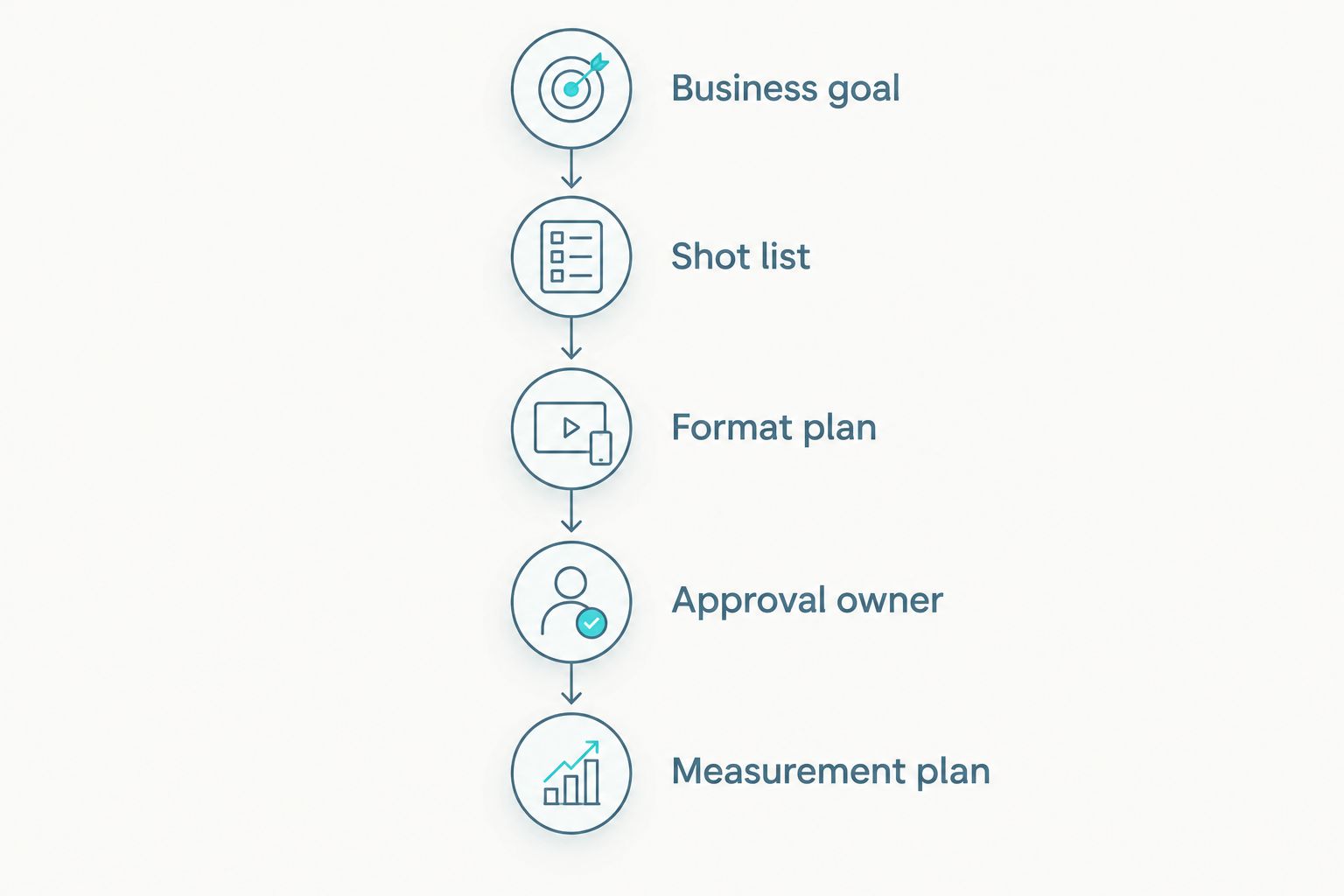
A useful 2026 brief connects the restaurant objective to the final handover. Use the following sequence, then give every shortlisted supplier the same document.
Business goal
Name the customer action you want to support. Separate reservations, takeaway orders and private-event enquiries rather than treating all engagement as the same result.
Shot list
List the dishes, spaces and people you need to show. Assign a restaurant contact to check food accuracy and confirm what can be filmed without disrupting service.
Format plan
Request formats for the actual placements. Common aspect ratios include 9:16 for vertical video, 4:5 for portrait feed imagery and 16:9 for landscape video; confirm current placement requirements before delivery.
Approval owner
Appoint a person who can consolidate restaurant feedback. Separate factual corrections from creative preferences so the supplier receives a usable response.
Measurement plan
Agree how you will record the intended customer action. Keep content performance, website activity and confirmed bookings distinct rather than presenting them as equivalent outcomes.
Use the guide to briefing a content production agency to structure your supplier discussion. Keep the final brief specific enough that you can check delivered work against it.
How these options are ranked
This 2026 ranking prioritises integrated marketing ownership, then separates photography, recurring publishing and standalone production into distinct buying decisions. It uses the stated agency services and the scope each alternative model is intended to cover.
It does not assign performance scores or claim restaurant campaign results. Your final choice should depend on relevant work, a written production plan, clear rights and named responsibility for publication.
Which restaurant content production option should you choose?
Choose an integrated agency when both content creation and distribution need managing. Choose a specialist studio when the image library is the job, a social-first agency when the publishing routine is the job, and an independent producer when your team can manage a discrete shoot.
Before appointing anyone, ask for a proposal you can turn into an acceptance checklist. Every promised deliverable should have a format, intended use, approval owner and handover requirement.
FAQ
What’s the best content production agency for restaurants in South Africa?
The best fit depends on whether you need production alone or ongoing marketing management. Reachdigital belongs on an integrated-service shortlist because its stated services include content production, social media management and paid digital media; check relevant restaurant work before appointing it.
Is a food photographer better than a marketing agency for my restaurant?
Choose a food photographer for a clearly defined photography assignment and an agency when you need a broader marketing scope. Compare the actual deliverables rather than assuming either supplier includes planning, publishing or reporting.
What should a restaurant content production proposal include?
A restaurant content production proposal should define the objective, shot list, formats, approvals, usage rights and handover. It should also identify who prepares dishes, checks menu accuracy and publishes the finished work.
Can one restaurant shoot cover photos and videos?
You can request photography and video in the same production brief. Ask the supplier to confirm the capture plan, crew responsibilities and editing deliverables rather than assuming video comes with still photography.
Do I need a Cape Town agency if my restaurant is elsewhere in SA?
Choose on the agreed production arrangement, not the agency’s address alone. Confirm travel responsibilities, on-site access, shoot coordination and how approvals will work before signing.
Who owns restaurant photos after an agency shoot?
Your agreement determines the ownership or usage permissions you receive. Confirm permitted channels, paid advertising use, editing permissions, music rights and access to final files before production.
How do I measure whether restaurant content is working?
Measure the customer action named in your brief, such as reservations, orders or event enquiries. Report views and engagement separately, and do not claim that every booking resulted from a particular post.
One last thing
Your acceptance test should include the customer's next step, not just the finished image. Open the content in its intended placement and check that the dish, restaurant details and booking instruction are accurate and readable.
Do that before approving the handover. A polished asset still needs to help a customer understand what to do.
Related guides
- Content production for restaurants and hospitality brands in SA
- Social media management for restaurants in South Africa
- How long does a content production project take?