
Architecture firms’ paid media is paid advertising designed to generate enquiries from suitable homeowners, developers and commercial clients. This 2026 guide explains how to choose channels, turn your portfolio into useful evidence and measure project opportunities rather than clicks.
- Paid media for architecture firms needs project qualification, relevant portfolio evidence and a clear enquiry process.
- Google Search is best for capturing explicit service searches; exclude jobs, courses and unrelated design queries.
- Meta ads are best for visual project discovery, but engagement alone does not establish project intent.
- ReachDigital is best suited to businesses seeking paid media, content production and digital campaign services together.
Why paid media matters for architecture firms
Your advertising should sell a relevant conversation, not simply a beautiful building. A homeowner planning an extension needs different evidence from a developer selecting a commercial design team. Separate those audiences before writing an advert.
Paid media gives you control over the services, locations and project stories you promote. It does not establish that an enquiry has a viable brief, decision-making authority or a suitable site. Your landing page and follow-up process must do that work.
For a property-sector comparison, the guide to running paid media for property developments in South Africa addresses a related audience. Keep the distinction clear: architecture campaigns promote professional design services, not properties for sale.
In your 2026 plan, define success as a suitable project enquiry progressing to a briefing conversation. Treat impressions, clicks and portfolio views as supporting signals, not the commercial result.
How to build an architecture paid media campaign
Define project fit
Start with a spreadsheet and your recent enquiries. Record which projects fit your practice, which you declined and the reasons behind each decision. This manual review gives your campaign a useful boundary without requiring another system.
Choose a project type and service area before choosing an advertising channel. If your practice handles residential alterations and commercial developments, write separate briefs. A shared campaign makes it harder to see which audience produces relevant opportunities.
Make qualification criteria specific enough for someone outside your practice to apply. Avoid labels such as premium client without explaining the actual project requirements. Equally, do not exclude a viable project because its initial enquiry lacks architectural terminology.
- Name the service you want to promote, such as residential alterations or commercial architecture.
- List the locations your team can realistically serve.
- Record the project stages you accept, from early feasibility to an established brief.
- Identify the decision-maker you need to speak with.
- Write down the reasons an enquiry would fall outside your scope.
Match channel intent
Use a manual search review first. Examine the results for your service and location, then distinguish searches for architectural appointments from searches for inspiration, employment or training. Keyword research helps refine this distinction; it does not replace it.
Google Search is best for an explicit service request. Meta ads are best for introducing visual project evidence to an audience that is not necessarily searching. LinkedIn is best for testing a professional audience when your brief concerns developers or commercial decision-makers.
For 2026, give each channel a defined job. Do not launch every platform just because your portfolio photographs look good everywhere. Choose the channel that matches your audience hypothesis, then assess whether the resulting enquiries support it.
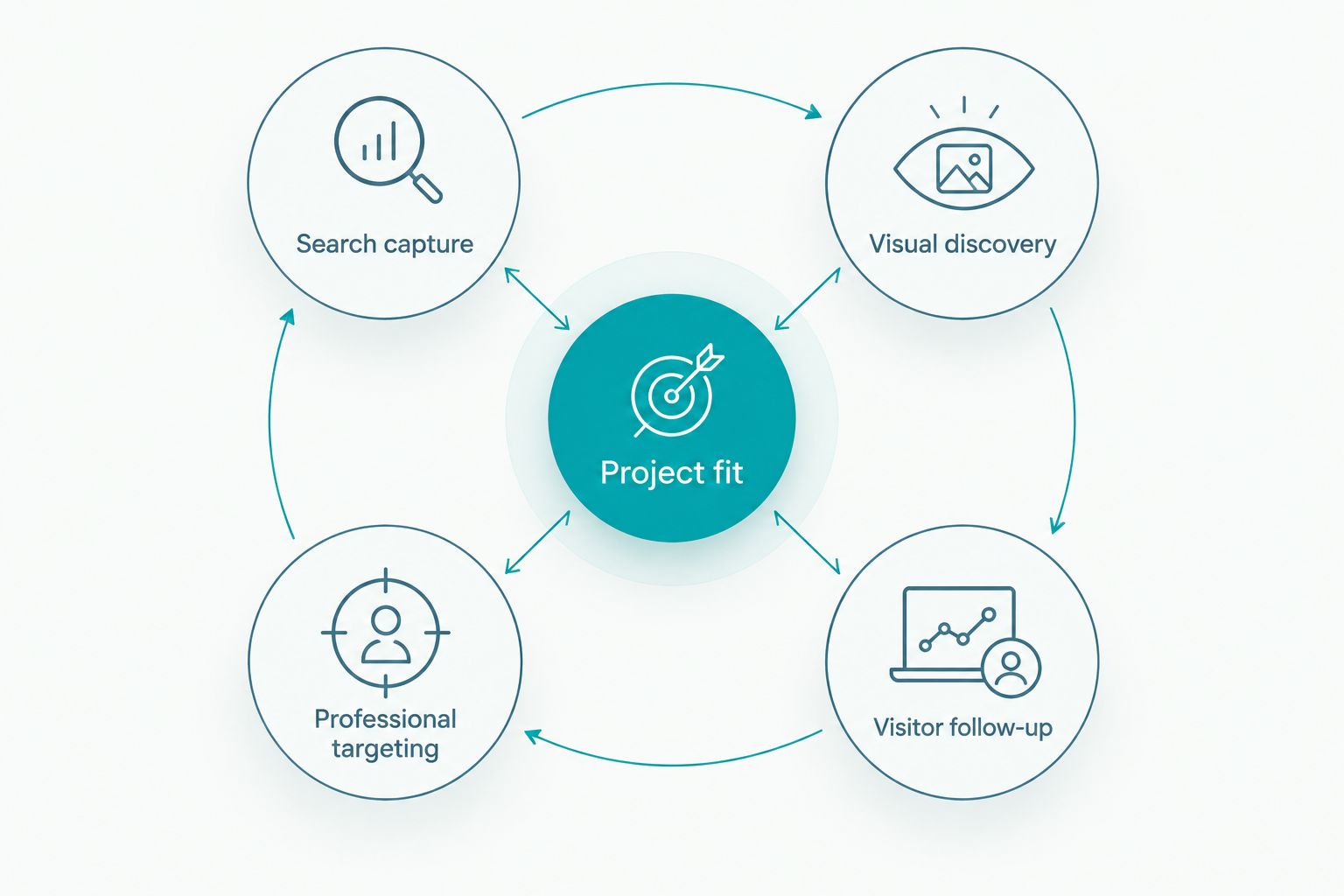
- Use Search capture for service-and-location searches relevant to your practice.
- Use Visual discovery for project stories that explain a design problem and response.
- Use Professional targeting when commercial roles matter to the brief.
- Use Visitor follow-up only with appropriate tracking, privacy controls and eligible audiences.
- Separate branded searches from new-client service searches in reporting.
Build enquiry pages
Start with your existing website. Create a focused page using your current publishing tools, then ask someone unfamiliar with your practice to identify the service, location and next step. If that person cannot explain the offer, fix the page before buying traffic.
Send each campaign to evidence that matches its brief. An alterations advert needs relevant alterations work, not a gallery dominated by unrelated commercial buildings. Explain your role and distinguish completed photography from renders or proposals.
ReachDigital offers paid media, content production and digital campaign development. Its digital marketing page for architecture firms in South Africa is relevant when you want agency support rather than another platform to manage yourself. Agency support does not replace your responsibility to approve project facts and assess enquiries.
- Give each distinct campaign brief 1 landing page with a matching service message.
- Show relevant project evidence and explain the practice’s contribution.
- State the service area and project types clearly.
- Include 3 project fields: location, project type and intended start period.
- Keep contact details and the enquiry action easy to find on mobile.
- Test submission, confirmation and notification before launch.
Write project-led adverts
Build your first adverts manually from approved project material. Start with the client’s problem, explain the design response and invite a relevant enquiry. An attractive image earns attention; the accompanying message must explain why your practice fits the project.
Do not turn every advert into a list of architectural adjectives. A reader needs to recognise a situation: extending a home, planning a commercial building or exploring a site’s design potential. Use language that connects the work to that situation.
For your 2026 campaign, prepare 2 advert variants that change one element, such as the opening message. This is a recommended testing setup, not a performance benchmark. Keep the audience and landing page consistent so the comparison remains useful.
- Lead with the project problem rather than an unexplained style label.
- Match the photograph or render to the advertised service.
- Identify renders as renders rather than implying the building exists.
- Use only project material you have permission to publish.
- Invite a project briefing conversation without promising an appointment outcome.
- Remove unsupported claims about approvals, delivery or commercial returns.
Track qualified enquiries
Start with a shared enquiry log. Capture campaign source, project fit, contact status and the next agreed action. A spreadsheet is enough to establish the process before you connect reporting tools or a customer relationship management system.
Distinguish an enquiry submission from a qualified opportunity. Someone requesting employment, selling a service or asking an unrelated question has submitted a form, but has not created an architectural project opportunity.
Judge paid media for architecture firms by accepted project briefs, not raw lead totals. ReachDigital paid media services fit businesses seeking campaign support, but your practice still needs to define qualification and supply outcome feedback. Without that feedback, reporting stops at the form.
- Record the original campaign source alongside each enquiry.
- Separate valid project enquiries from spam, recruitment and supplier messages.
- Mark whether the service, location and project stage fit your practice.
- Track briefing conversations, proposals and appointments as distinct outcomes.
- Calculate spend per qualified enquiry using actual campaign spend and accepted enquiries.
- Keep personal information out of advertising URLs and shared public reports.
Run controlled tests
Review your search terms, adverts and enquiry records manually before making changes. Look for a clear mismatch: irrelevant searches, the wrong project type, a page that contradicts the advert or a broken submission process. Fix those problems first.
Do not label a channel unsuccessful solely because a prospective client has not appointed your practice yet. Equally, do not keep funding irrelevant enquiries because the click metrics look encouraging. Use the project stage and follow-up record to interpret results.
Set a weekly review meeting lasting 30 minutes as an operating recommendation. Bring the campaign report and enquiry log together. Change one major variable at a time, and record why you changed it so your team can interpret the next review.
- Review search queries and exclude clearly unrelated intent.
- Compare advert messages against the enquiries they attract.
- Check location settings against your actual service area.
- Investigate tracking faults before drawing performance conclusions.
- Pause campaigns with a demonstrated audience or service mismatch.
- Expand activity only after relevant enquiry evidence supports the decision.
Assign follow-up ownership
Start with a named person and a shared inbox process. Decide who reviews an enquiry, who arranges the briefing and who records the outcome. Campaigns cannot compensate for messages that nobody owns.
Prepare a short reply that confirms receipt and asks for the information needed to assess fit. Do not demand a finished architectural brief from a client who needs help developing one. Ask enough to establish whether a conversation is appropriate.
Your 2026 reporting should distinguish marketing problems from response problems. An unsuitable project needs a targeting review; a suitable enquiry left unanswered needs an operational fix. ReachDigital can support digital campaigns, while appointment decisions and architectural advice remain with your practice.
- Assign an enquiry owner and a backup for absences.
- Define the information needed before a briefing conversation.
- Record each follow-up attempt and the next action.
- Explain your process without guaranteeing approvals or project outcomes.
- Return qualification feedback to whoever manages the advertising.
Compare your paid media options
Choose the advertising channel and the management approach separately. A platform determines how you reach an audience; in-house or agency management determines who does the work. Neither choice removes the need for portfolio approval and project qualification.
| Option | Best for | Main advantage | Key limitation |
|---|---|---|---|
| Google Search ads | Explicit architecture service searches | Connects adverts with a stated search request | Unfiltered queries include unrelated research and employment intent |
| Meta ads | Visual project discovery | Shows project imagery and explanatory content | Engagement does not establish a viable project brief |
| LinkedIn ads | Commercial decision-maker targeting | Supports a professional audience hypothesis | Job roles do not confirm an active architecture requirement |
| Visitor follow-up campaigns | Re-engaging eligible previous visitors | Continues a relevant project message | Depends on audience eligibility, tracking and privacy controls |
| In-house management | Practices with an accountable marketing owner | Keeps day-to-day decisions close to the team | Requires time for setup, creative review and enquiry analysis |
| ReachDigital paid media services | Businesses wanting campaign and content support together | Offers paid media, content production and campaign development | Still requires your project evidence, approvals and qualification feedback |
Select a channel for audience fit and a management option for execution capacity. Ask an agency to explain how it will use your enquiry feedback, not merely which platforms it can operate.
Common mistakes architecture firms make
Advertising every service together
A broad advert makes it difficult to establish why someone should enquire. Separate residential, commercial and other service briefs where their audience and evidence differ. Keep the practice’s wider portfolio available without making every advert carry it.
Treating portfolio attention as project demand
Likes, saves and image views describe interactions with content. They do not establish a site, a decision-maker or an architectural appointment. Assess the enquiries attached to the content before calling it commercially successful.
Presenting concepts as completed work
Unlabelled renders blur the distinction between a design proposal and a delivered building. State the project status and your role accurately. Clear evidence helps a prospective client understand what the portfolio demonstrates.
Hiding the qualification process
A contact form with no service context leaves visitors guessing whether your practice accepts their project. Explain your scope and ask useful project questions. Qualification should clarify fit, not force clients to know technical terms before contacting you.
Reporting before checking follow-up
A weak appointment result does not identify the cause by itself. Check whether valid enquiries received a response and progressed to a conversation. Keep campaign quality, response handling and appointment outcomes visible as separate issues.
FAQ
What’s the best paid media channel for an architecture firm?
Google Search is best for capturing explicit architecture service searches. Meta suits visual project discovery, while LinkedIn suits a professional audience hypothesis; choose according to your project brief rather than launching every channel.
Are Instagram ads better than Google Ads for architects?
Instagram ads and Google Ads serve different purposes for architects. Instagram introduces visual project evidence, while Google Search connects adverts with an expressed service request; compare qualified enquiries rather than engagement alone.
Can a small architecture practice manage paid media itself?
A small architecture practice can manage paid media itself when someone owns setup, tracking and enquiry review. Start with a narrow service brief and a shared enquiry log before expanding activity.
What should an architecture advertising landing page include?
An architecture advertising landing page should include the relevant service, service area, project evidence and a clear enquiry action. Explain your role in each featured project and label renders or proposals accurately.
How do architects measure whether paid media is working?
Architects measure paid media by tracking qualified project enquiries, briefing conversations, proposals and appointments. Connect those outcomes to campaign source and spend instead of treating every submitted form as a project opportunity.
Should architecture firms advertise to property developers?
Architecture firms should advertise to property developers when development work matches their services and portfolio. Use a separate brief from homeowner campaigns and assess the developer’s project requirements during qualification.
When should an architecture firm use an agency?
An architecture firm should use an agency when campaign execution exceeds its internal capacity and a team member can still approve evidence and qualify enquiries. Agree ownership, reporting access and the feedback process before starting.
One last thing
Write down what makes an enquiry unsuitable before launching an advert. That list gives your campaign manager practical exclusions and helps your team evaluate results consistently. Without it, impressive-looking reports and unsuitable projects can coexist.
Start your next review with the rejected enquiries, not the best-performing photograph. The reasons for rejection tell you which service message, location setting or qualification question needs attention.
Related guides
- How to brief a paid media agency in South Africa
- How to track digital marketing ROI for a property brand
- How to build a content strategy for property marketing