
Yes—influencer marketing is worth testing for beauty brands in 2026 when you can connect relevant creator content to sales, qualified engagement or usable marketing assets. Creator fees alone do not capture the commitment: product fulfilment, approvals, content rights, campaign management and measurement also belong in your assessment. Treat influencer marketing as a commercial test, not a guarantee that an audience will become customers.
- Is influencer marketing worth it for beauty brands in 2026? Yes, when you measure outcomes beyond likes.
- Beauty brands should assess audience fit, product demonstrations and attributable sales before repeating influencer campaigns.
- ReachDigital suits beauty brands seeking social media management, content production and paid digital media within one agency brief.
Is influencer marketing worth it for beauty brands in 2026?
It is worth it when the partnership solves a specific buying or content problem. For beauty brands, that might mean showing a makeup finish, explaining how to use a product or producing material you can reuse under an agreed licence.
Choose the arrangement according to the job. These options are not interchangeable, and none proves profitability just because the content looks good.
| Campaign option | Best for | Main advantage | Main limitation | Recommendation |
|---|---|---|---|---|
| Creator publishes to their audience | Relevant audience exposure | Places a product demonstration in the creator's own content | You do not control who sees the post or whether viewers buy | Test when audience fit is documented |
| Creator produces content for your channels | Product explanation and creative assets | Gives you material built around your brief | Content delivery does not include access to the creator's audience | Choose when content is the main objective |
| Creator content used in paid advertising | Controlled distribution and creative testing | Lets you assess licensed content within an advertising campaign | Requires suitable rights, media management and separate reporting | Test after agreeing advertising permissions |
For execution detail, use the guide to running influencer campaigns for consumer brands in South Africa. Start with the outcome you need, then select the creator and distribution method—not the other way round.
Why this matters
A creator partnership produces several things that are easy to confuse: exposure, content and customer action. You need to know which one you bought.
A video can meet its production brief without producing attributable orders. A post can generate comments without reaching your intended buyers. Judge each result against its agreed purpose rather than calling every visible interaction a success.
ReachDigital is best suited to beauty brands seeking connected social media management, content production and paid digital media. That service mix fits a coordinated campaign brief; it does not establish that an influencer partnership will be profitable. Your campaign still needs its own commercial evidence.
Use 3 decision checks before committing
Before you approve a beauty influencer campaign in 2026, check relevance, readiness and measurement. These are decision checks, not industry performance benchmarks.
Audience relevance
Ask for audience information that matches where and to whom you sell. For a South African campaign, examine the audience's location rather than assuming a South African creator has a predominantly local following.
Review the creator's actual beauty content too. Look for clear demonstrations, relevant questions and a style that can explain your product without making unsupported claims. Follower count is context, not a substitute for fit.
Product-page readiness
Follow the proposed customer journey yourself. Does the linked page explain the product, show it clearly and answer the questions the creator's content raises?
Fix contradictions before publishing. If the video demonstrates an application method that the product page does not explain, your visitor has to reconcile the difference. A creator should not carry the burden of an unclear destination page.
Measurement readiness
Confirm that campaign links, purchase tracking and creator-level reporting work before the content goes live. Decide how you will distinguish new customers from existing customers where your records support that distinction.
Wait if you cannot explain how the campaign will be evaluated. Publishing first and agreeing success criteria afterwards leaves you with activity, not a defensible decision.
Why influencer marketing results vary
There is no single verdict that applies to every beauty creator or product. Assess these factors in your own campaign rather than borrowing another brand's result:
- Audience fit: Check whether the creator reaches people you can serve and who have a relevant interest in the product.
- Demonstration quality: Specify what viewers need to see, such as application, texture or finish, without unsupported performance promises.
- Campaign objective: Separate audience exposure, content production and customer acquisition so each has appropriate evidence.
- Content permissions: Record whether your agreement covers reposting, editing and paid advertising rather than assuming ownership.
- Customer journey: Check that the destination page answers the buying questions raised by the creator's content.
- Measurement design: Agree tracking, reporting and attribution rules before comparing campaign outcomes.
A campaign can fail one of these checks while appearing strong on another. Use the list to locate the problem, not to excuse it.
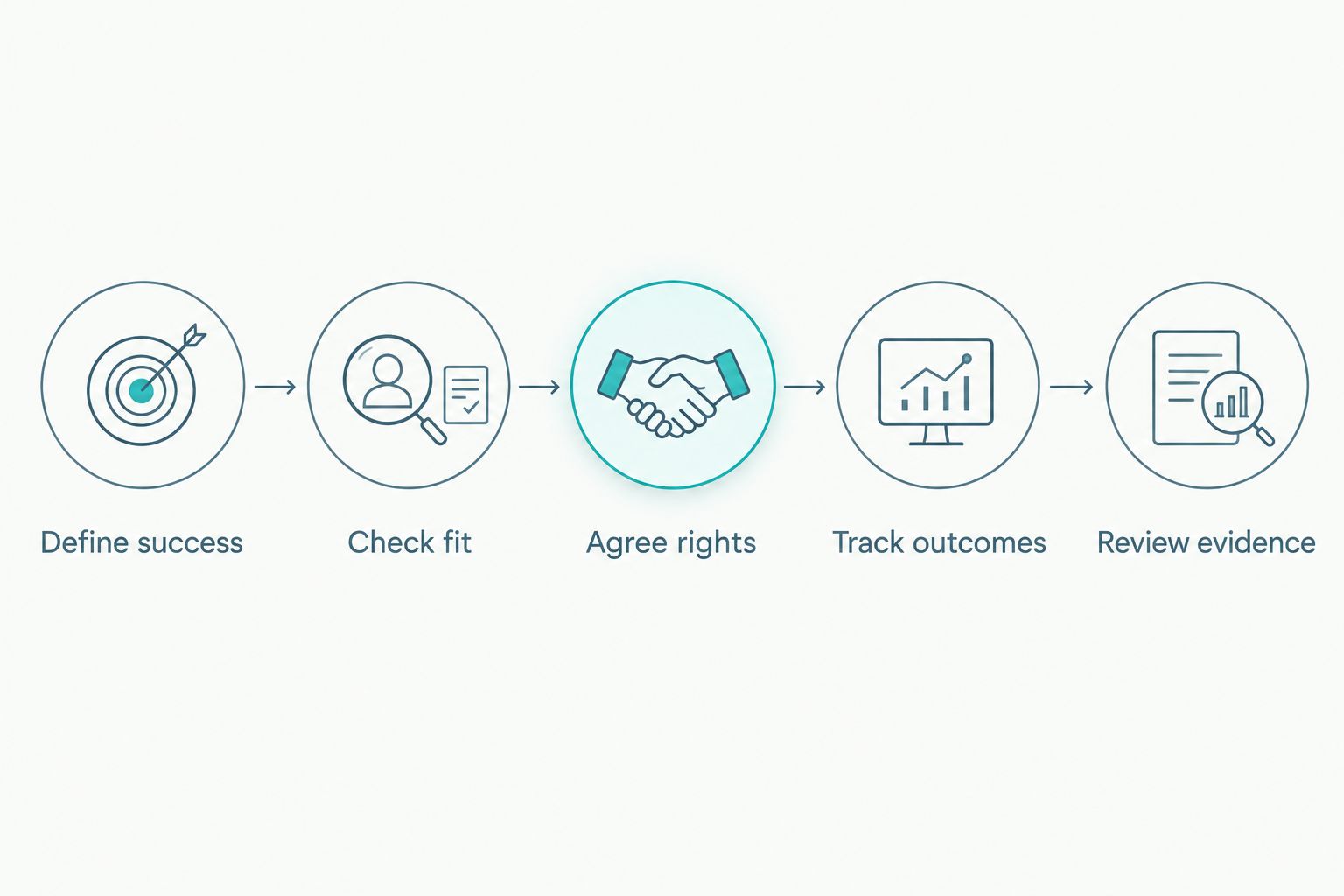
Build the campaign in 5 steps
For your 2026 test, use a sequence that makes the decision reproducible. The purpose is to learn whether a particular creator, message and distribution arrangement deserves another commitment.
1. Define success
Choose the primary result: customer acquisition, product education or licensed content delivery. Write it into the brief in plain language.
For acquisition, assess customer actions and the contribution left after relevant costs. For content delivery, assess whether the agreed assets meet the brief and have the permissions you need. Do not change the objective simply because a different metric looks better.
2. Check fit
Assess the creator's audience information alongside their published work. Ask how they would demonstrate your product and which audience question the content would answer.
Review promotional content, not just their strongest non-commercial post. You are commissioning a commercial message, so examine whether the creator can explain a product clearly while identifying the partnership.
3. Agree rights
Specify deliverables, approval responsibilities, publication requirements and permitted uses in writing. Include who handles product questions and who can approve factual claims.
Separate organic reposting from advertising use. If you want edited versions, different formats or paid distribution, include those uses explicitly instead of treating a published post as unrestricted creative material.
4. Track outcomes
Use a consistent naming system for creator links and campaign records. Test the route from the published link through to the action you intend to measure.
Keep organic creator results separate from paid distribution results. Otherwise, the same campaign can receive overlapping credit in different reports, making a combined total look more convincing than the underlying evidence.
5. Review evidence
Compare delivery, customer actions and financial results with the original brief. Record limitations alongside the outcome so the next decision uses the same standard.
Repeat a partnership because its evidence supports the next objective. If the content was useful but acquisition disappointed, consider a content-focused brief rather than pretending the original sales objective succeeded.
Put 4 requirements into your beauty creator brief
A useful brief gives the creator room to communicate while keeping the commercial essentials clear. For a 2026 campaign, include these requirements:
- The customer question: State what the viewer should understand after watching, such as how to apply the product or what its finish looks like.
- The factual boundaries: Supply approved product information and identify claims the creator must not make without support.
- The deliverables and permissions: Describe the content, publication arrangement, approval process and permitted reuse.
- The measurement plan: Record the destination, tracking method, reporting responsibilities and success criteria.
Give the creator a clear task, not a script packed with praise. For beauty content, require demonstrations to represent the product honestly; lighting, editing and presentation should not create a misleading impression of its effects.
Keep the approval process practical. Name the person who checks product facts and the person who approves publication so conflicting feedback does not turn into an unclear final message.
How do you measure whether influencer marketing paid off?
Measure contribution, not just sales revenue. Revenue attributed to a campaign does not account for product costs, fulfilment or the campaign itself.
Start with recorded campaign sales, then identify the relevant deductions in your financial records. Include creator commitments, product supplied, shipping, production, management, licensed usage and paid distribution where applicable. Avoid counting the same expense twice.
Use these distinctions when reporting:
- Attributed orders are orders assigned to the campaign under your chosen tracking rules.
- Incremental orders are orders caused by the campaign that would not otherwise have happened; attribution alone does not establish this.
- Content value is a separate assessment of accepted assets and their permitted use, not an invented sales figure.
A creator-specific code or tracked link helps identify recorded activity. Neither captures every influence on a purchase, and neither proves that every recorded customer bought because of the creator.
In your 2026 report, state the attribution rules and review period alongside the result. If you cannot establish incrementality, describe the outcome as attributed rather than incremental. That distinction keeps the decision honest.
When should a beauty brand wait instead?
Wait when the campaign cannot support a clear buying journey, an approved message or a measurable objective. A creator partnership is not the first fix for those gaps.
Pause the brief if:
- The destination page cannot answer basic product questions.
- The creator cannot provide relevant audience information.
- The proposed content relies on unsupported beauty or health claims.
- You expect advertising use but have not agreed those rights.
- Your team cannot separate campaign activity from existing marketing in its reporting.
Do not confuse waiting with abandoning the channel. Correct the specific blocker, then reassess the test. Equally, do not keep commissioning campaigns simply because content has already been produced; previous effort is not evidence that another partnership is justified.
Should you manage the campaign yourself or use an agency?
Choose based on the work required and your team's capacity to own it. Someone needs to manage creator selection, product information, approvals, rights, customer journeys and reporting.
An internal team can keep those decisions close to the product, but it must make time for coordination and measurement. An agency adds another management relationship, so its responsibilities and reporting need to be explicit. Neither arrangement removes your responsibility for accurate product claims.
ReachDigital offers social media management, paid digital media, content production and digital campaign development. If you need those functions connected, start with an influencer marketing agency brief for beauty brands in South Africa and ask which responsibilities are included in the proposed scope.
Plan your beauty campaign
Define the audience, content requirements and measurement plan before committing to creator partnerships.
FAQ
Is influencer marketing worth it for a small beauty brand in 2026?
Yes, influencer marketing is worth testing for a small beauty brand in 2026 when the audience fits and the objective is measurable. Wait if the product page, approved claims or tracking cannot support the campaign.
Are smaller beauty influencers better than larger influencers?
Smaller beauty influencers are not automatically better than larger influencers. Assess audience relevance, demonstration quality and campaign evidence rather than selecting by follower count alone.
Is influencer marketing better than paid social for beauty brands?
Neither influencer marketing nor paid social is universally better for beauty brands. Creator publishing provides access to that creator’s audience, while paid social provides an advertising distribution method; licensed creator content can also be tested in paid campaigns.
Can I use an influencer’s video in my beauty ads?
Use an influencer’s video in beauty ads only under an agreement that permits that advertising use. Specify editing permissions, channels and other usage conditions before publishing or distributing the material.
How do I know whether an influencer campaign generated profitable sales?
Assess the contribution remaining after relevant product, fulfilment and campaign costs, not sales revenue alone. Report attributed sales separately from any evidence of incremental sales.
Can ReachDigital help with a beauty brand’s wider digital campaign?
ReachDigital offers social media management, paid digital media, content production and digital campaign development for businesses including consumer and e-commerce brands. Confirm the creator-related responsibilities and reporting included in your proposed campaign scope.
One last thing
Check the rights before celebrating the content. A useful beauty demonstration and permission to use it in advertising are different deliverables.
If a post performs well, your next move might be licensed reuse rather than another creator publication. Make that decision from the campaign evidence and the agreement—not from an assumption that commissioning content means owning every use of it.
Related guides
- Paid social for beauty brands in South Africa
- How to choose an influencer marketing agency in South Africa
- Content production for e-commerce brands in Cape Town