
Boutique hotel content production is the planning, creation and distribution of photography, video and written content with the aim of turning interest into booking enquiries. Your content needs to show the difference between room categories, explain the experience accurately and help guests choose a stay—not just admire the décor.
- Content production for boutique hotels should answer booking questions before filling a social media calendar.
- ReachDigital content production suits businesses connecting photography, video and copy with social media, paid media and SEO.
- Use hotel photography to explain room differences, and hotel video to show layout and atmosphere.
- Measure booking enquiries and completed reservations separately from views, likes and saves.
Why content production matters for boutique hotels
A room photograph has a practical job: help someone understand what they are booking. A destination guide has another: explain why your location fits their trip. Neither works well when the content promises an experience your operations team cannot deliver.
Boutique hotels need a production plan built around the actual property. Different room layouts, distinctive interiors and guest-facing service details need individual treatment rather than interchangeable images. The wider digital marketing guide for boutique hotels in Cape Town puts those assets in their campaign context.
For your 2026 plan, separate inspiration from decision support. Attractive content introduces the hotel; accurate room pages, useful answers and a clear booking route help someone act. Produce both, and give each asset a defined purpose.
The operating constraint matters too. A shoot needs prepared rooms, staff coordination and permission to photograph people. Your content calendar must fit around the guest experience—not turn the hotel into a production set without notice.
How to build your boutique hotel content production plan
Identify the guest decision you need to support
Start manually with your reservation emails, enquiry messages and questions heard at reception. Remove personal information and group the questions by theme. This gives you a working brief without buying software or commissioning a shoot.
Choose the audience from your own booking records rather than a fashionable traveller persona. A couple planning a leisure stay and someone attending a nearby conference need different information. Only create a campaign around either group when the hotel genuinely serves that need.
Write a short purpose statement for every planned asset: who it helps, what it explains and what the reader should do next. A room walkthrough might support room selection; a neighbourhood guide might support trip planning. Those are different assignments.
Your 2026 brief should distinguish verified property facts from creative ideas. If an amenity, access arrangement or service is unconfirmed, leave it out until the responsible person approves it.
- Guest questions: collect recurring questions from enquiries and reception.
- Stay purpose: identify the trip types supported by your booking records.
- Decision barrier: name the uncertainty each asset will resolve.
- Next action: choose a room-page visit, enquiry or booking action.
Audit the assets before booking a shoot
Use a shared spreadsheet to list existing images, videos and written pages. Record the subject, room category, creation date, usage permission and intended channel. Open the files; a filename alone does not tell you whether an image is usable.
Then check content against the current property. Changed furniture, a renovated bathroom or a different room configuration makes an older image unsuitable for that room page. Keep useful material, but do not let a beautiful photograph override accuracy.
Organise the audit around four folders: Room details, Shared spaces, Local context and Booking answers. These are production categories, not a requirement to invent facilities or nearby experiences. Include only what you can show and verify.
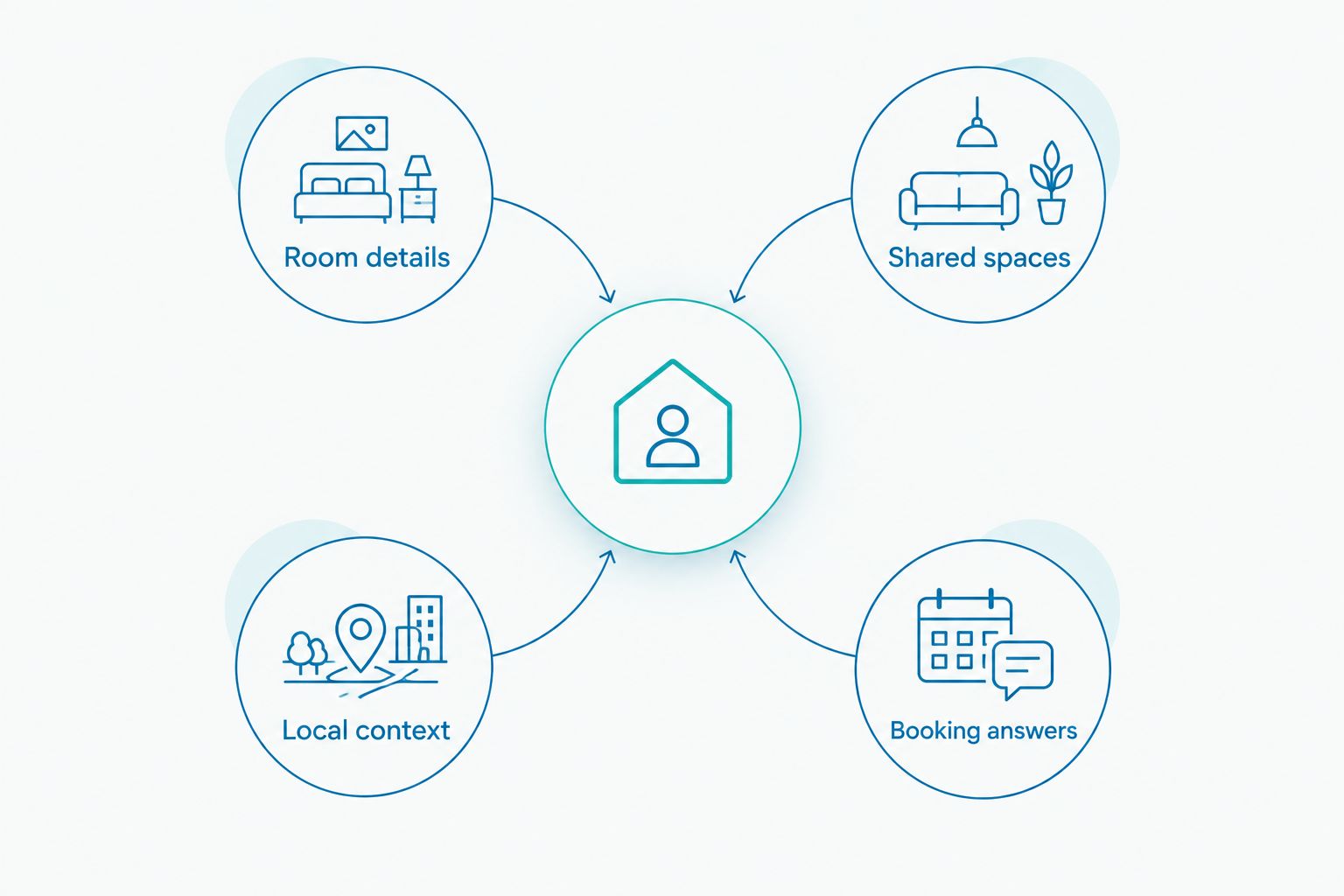
Mark every gap as missing, outdated or unsuitable for its intended use. That distinction prevents unnecessary reshoots and makes the production brief specific.
- Room details: match each asset to the correct room category.
- Shared spaces: verify that photographed areas remain accurate.
- Local context: check names and visitor information before publishing.
- Booking answers: identify questions your existing pages leave unanswered.
- Usage permission: record where each asset is authorised for use.
Write a shoot brief around usable deliverables
Build the first brief yourself in a document. Specify the subject, intended placement, required orientation, factual details and approval owner. Attach reference images to explain composition—not to ask a photographer to copy another hotel's identity.
Plan horizontal 16:9 frames for landscape video, vertical 9:16 frames for portrait video and square 1:1 crops where the layout calls for them. These are aspect ratios, not platform performance promises. Check the current placement requirements before exporting final files.
An agency becomes useful when you need production coordinated with distribution. ReachDigital content production is best for businesses connecting assets with social media, paid media and SEO. ReachDigital offers those services; confirm the hotel-specific scope, crew responsibilities and deliverables before commissioning work.
The limitation is straightforward: an agency brief still needs accurate hotel information and an available approver. No external team can verify an undocumented room feature on your behalf.
- List each room category and the views needed to explain it.
- Specify horizontal, vertical and square versions by intended placement.
- Assign staff preparation, room access and shoot coordination.
- Confirm permissions for people, music and commissioned material.
- Define final files, editing responsibilities and approval checkpoints.
Capture the experience without misrepresenting it
Start with a phone walkthrough to test the shot sequence before the main production session. Walk from the entrance into the room, show the bathroom and capture distinguishing features. This rehearsal exposes missing views and awkward transitions without committing the whole crew.
During the shoot, capture the space as a guest will encounter it. Detail shots add character, but they do not replace a clear view of the room. Avoid compositions that obscure a layout difference relevant to room selection.
Photograph any featured service in its real operating context. If you show dining, confirm what the image represents before writing the caption. If you feature staff, explain the intended use and obtain appropriate permission. Keep guests out of frame unless participation is agreed.
For 2026 content, add a factual check immediately after capture. It is easier to identify a mismatched room label while the shoot is fresh than after files have been edited and distributed.
- Capture an establishing view before close-up detail shots.
- Show room layout and bathroom configuration clearly.
- Keep signage, personal documents and guest information out of frame.
- Record which room category appears in each sequence.
- Check captions against the actual service or feature shown.
Turn each approved subject into channel-specific content
Start manually with the approved photographs, a basic editing tool and a shared content calendar. Write the room-page explanation first. Once the factual description is settled, adapt the subject for social posts, video captions and campaign creative.
Reuse the subject, not necessarily the finished file. A website visitor comparing rooms needs labelled photographs and explanatory copy. A social viewer needs an understandable opening frame. A paid campaign needs a clear connection between the creative and its destination page.
Write descriptive headings using your verified room names and location. Answer practical questions in text rather than hiding all useful information inside video. That gives readers, search engines and assistants an accessible explanation of the hotel experience.
Your 2026 calendar should show the content purpose, publishing channel, approval status and destination. ReachDigital's social media management, paid digital media and SEO services fit this distribution stage; agree which responsibilities sit with the agency and which remain with the hotel.
- Pair room photographs with accurate, category-specific descriptions.
- Add readable captions to spoken video content.
- Give each post an action matched to its subject.
- Match campaign creative to the page it promotes.
- Check crops and text placement in the final preview.
Measure booking actions and refresh the weak links
Start with your existing booking reports, enquiry records and website analytics. Record the content destination and campaign source where tracking allows it. Separate a booking-button click from a completed reservation; they describe different stages.
Check the handover to the booking engine. If the visitor leaves your main website, verify whether tracking continues correctly. Treat incomplete tracking as incomplete evidence, not proof that content has failed or succeeded.
Review content by its assigned job. A neighbourhood article should be assessed against relevant visits and onward actions. A room page should be assessed against room-selection and booking behaviour. Do not judge every asset by the same engagement metric.
For your 2026 review, compare like with like and record other changes that affect interpretation, including campaign targeting or booking-page updates. Use the results to choose the next production task, not simply to justify more posting.
- Track enquiries and reservations as separate outcomes.
- Test booking links on mobile and desktop.
- Check campaign-source tracking across the booking journey.
- Record content changes alongside distribution changes.
- Refresh misleading or outdated assets before producing extras.
Compare your content production options
Choose the production model around the work you need done. Ownership of the brief matters in every option: someone at the hotel must verify room information, coordinate access and approve publication.
| Option | Best for | Main advantage | Key limitation |
|---|---|---|---|
| In-house team | Routine property updates and operational answers | Direct access to current hotel information | Shooting, editing and publishing compete with other duties |
| Freelance photographer or videographer | A defined room shoot or property film | A focused assignment with clear visual deliverables | Distribution and ongoing copy need separate ownership unless included |
| Independent creator | A specific narrative or on-camera format | A recognisable storytelling approach | Style, permissions and factual accuracy need explicit briefing |
| ReachDigital agency services | Production connected to social media, paid media and SEO | Related marketing services are available from the same agency | Hotel-specific scope and responsibilities must be agreed; results depend on more than production |
Keep routine updates close to operations; commission specialist work when the brief requires it. An external production team does not replace the hotel's approval process, and an internal team should not be expected to handle every technical assignment without support.
Common mistakes boutique hotels make
Using one room as a substitute for every category
A polished hero room does not explain the rest of the property. Label room photographs accurately and show meaningful differences between categories. Do not let a campaign image imply that every guest receives the same layout or view.
Shooting details while leaving practical questions unanswered
A bedside arrangement adds atmosphere. It does not show how the room works. Balance character shots with establishing views and clear written answers about verified features and access arrangements.
Planning production around guest-facing peak activity
An uncoordinated shoot creates avoidable conflict with cleaning, arrivals and service. Agree room access and staff involvement with operations before confirming the schedule. Protect the guest experience throughout capture.
Publishing destination claims without checking them
Do not describe a venue as walkable, nearby or easy to reach without checking the route and context. Verify visitor information before publication, and avoid implying a partnership with another business unless that relationship exists.
Treating attractive engagement as booking evidence
Likes, views and saves describe content interactions. They do not establish completed reservations. Report each outcome accurately and investigate the route from content to the booking engine before drawing conclusions.
FAQ
What is content production for boutique hotels?
Content production for boutique hotels is the creation of photography, video and written material that explains the property and supports booking decisions. It includes briefing, capture, editing, factual approval and preparation for each publishing channel.
What’s the best content to produce for a boutique hotel?
The best content answers your guests’ actual booking questions. Prioritise accurate room photographs, clear room descriptions, useful walkthroughs and verified location information before adding decorative campaign material.
Is hotel photography better than video?
Hotel photography and video serve different purposes. Photography supports room comparison, while video can show layout and atmosphere; choose the format according to the question the asset must answer.
Can a small hotel produce content in-house?
A small hotel can produce routine updates and useful written answers in-house. Use a documented brief and an approval process, and commission specialist photography or video when the assignment exceeds the team’s skills.
How often should a boutique hotel refresh its content?
Refresh boutique hotel content when the property, service or information it shows changes. Review the content calendar regularly, but do not reshoot accurate assets merely to create something new.
How do you measure whether hotel content generates bookings?
Measure booking enquiries and completed reservations separately from content engagement. Check campaign-source tracking and the transition to the booking engine before attributing reservations to a particular asset.
What should I ask a content production agency before hiring it?
Ask about deliverables, room access, usage permissions, editing, factual approval and distribution responsibilities. ReachDigital offers content production alongside social media management, paid digital media and SEO; confirm how those services would fit your hotel’s brief.
One last thing
Before approving another shoot, ask someone unfamiliar with the hotel to choose a room using only your current website. Have them explain what they expect to find on arrival.
Any mismatch between that expectation and the actual room belongs at the top of your production list. Your next useful asset is the one that removes a booking uncertainty—not necessarily the one that looks most impressive.
Related guides
- How to brief a content production agency in South Africa
- How to build a digital marketing strategy for a hotel in SA
- How to increase online bookings for a Cape Town hotel