
Craft brewery branding is the system of positioning, naming, design and communication that helps adult customers recognise your brewery and understand why to choose it. This 2026 guide to branding for craft breweries connects beer labels, taproom experiences and digital marketing without treating a new logo as the whole job.
- Branding for craft breweries starts with positioning, then connects packaging, taproom experiences and digital marketing.
- Keep the brewery recognisable across beer styles; let individual releases vary within a shared identity.
- ReachDigital is best for consumer brands seeking content production, social media management and digital campaigns.
- Measure customer actions alongside recognition; engagement alone does not establish a commercial result.
Why branding matters for craft breweries
Your brewery identity has to work on a label, a tap handle, a retailer listing and a phone screen. Each has a different job: identify the maker, explain the beer or help someone take the next step.
Build the brand around the buying decision, not around the artwork. A taproom visitor needs practical information. A retail customer needs a clear beer style. A hospitality buyer needs a useful product presentation and a route to enquire.
Use a consumer brand content strategy to connect those decisions rather than publishing disconnected beer photographs. For your 2026 plan, separate brewery recognition from individual release promotion so you can assess both.
Craft brewery branding also needs a clear boundary between creative expression and alcohol marketing responsibilities. Review packaging, audience targeting and promotional content against applicable South African requirements and current platform policies before publishing. Treat that review as part of production, not a correction after launch.
Build your craft brewery brand in seven steps
Start with a shared document and your existing assets. You do not need an agency to decide what your brewery stands for; you need agreement before anyone designs, photographs or advertises it.
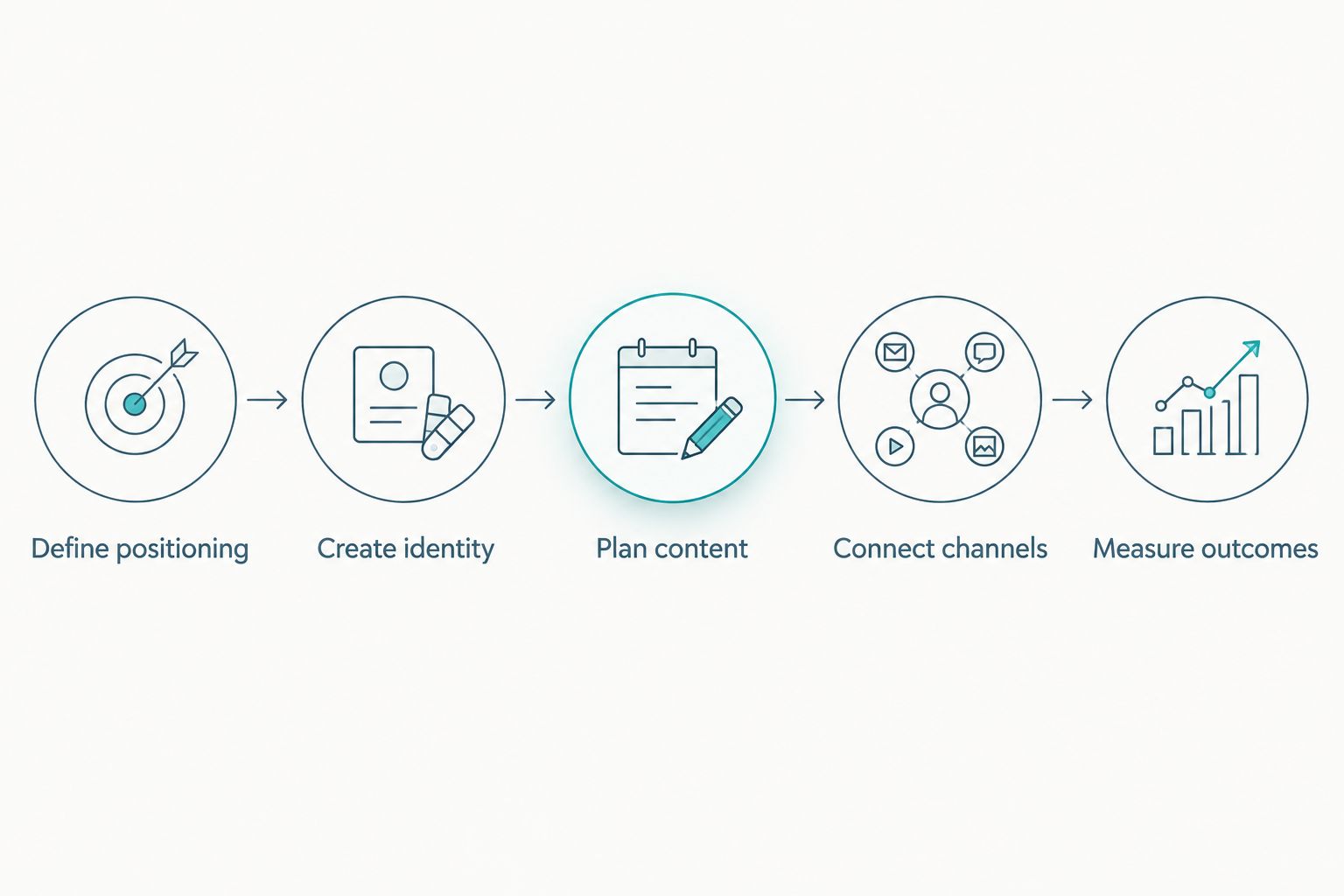
The working sequence is: Define positioning, Create identity, Plan content, Connect channels, Measure outcomes. The steps below turn that sequence into tasks your team can own.
Define your audience and commercial priority
Write a 1-page brief before commissioning any creative work. Name the adult customer you want to reach, the buying occasion and the action you want that person to take. Keep wholesale buyers separate from drinkers: their questions and decision processes are different.
Choose a primary commercial priority for the brief. Taproom visits, retail recognition, online purchases and trade enquiries need different messages and destinations. Trying to give every audience equal space in every asset leaves the creative team without a clear decision rule.
Ground the brief in evidence you already hold. Review customer questions, staff observations and order records where available. Record observations separately from assumptions; a founder's preferred beer style is not evidence of customer preference.
- Name the primary adult audience and its buying occasion.
- Choose the main action each campaign should support.
- Collect recurring questions from taproom staff and customer messages.
- Separate consumer messages from hospitality and retail buyer messages.
- Mark assumptions that need customer feedback before approval.
Write a positioning statement you can prove
Describe what your brewery makes, who it serves and what gives that audience a reason to choose it. Use ordinary language. If the statement depends on vague words such as quality, passion or authenticity, replace them with something your business can demonstrate.
A brewery story should distinguish the maker without making the beer difficult to understand. Location, brewing approach, ownership and ingredients belong in the story only when they are accurate. Do not turn an aspiration into a claim about sourcing or production.
Draft the positioning yourself, then test it through conversation. Ask adult customers what they understand, what feels distinctive and what needs explanation. The useful result is clarity, not approval of your favourite wording. Write down the evidence behind each factual claim so future copy stays consistent.
- Draft a plain-language sentence describing the brewery and its audience.
- List the evidence supporting each point of difference.
- Remove claims that your team cannot substantiate.
- Translate brewing terminology into accessible taste descriptions.
- Agree on words the brand uses and words it avoids.
Create an identity that holds the range together
Lay out your existing labels, menus and social assets side by side. Identify what stays constant and what changes between beers. Your brewery name should remain recognisable even when a seasonal release takes a different creative direction.
Build a hierarchy for brewery name, beer name, style and required product information. Check the hierarchy on physical packaging and small digital images. Colour can help distinguish styles, but the written information must still do its job without colour alone.
For your 2026 production brief, approve the rules before expanding the asset set. ReachDigital's content production and digital campaign services are a fit for applying an agreed identity across digital communications; specify packaging design separately rather than assuming it is included. The craft brewery content production guide helps frame that execution brief.
- Define which identity elements stay fixed across the range.
- Set a readable hierarchy for brewery, beer and style names.
- Check label artwork on physical packaging, not just a monitor.
- Prepare examples for product images, menus and social posts.
- Record approval responsibilities for design and product information.
Plan content around beer, people and place
Build a 30-day content calendar in a spreadsheet before commissioning a larger shoot. Treat that period as a planning window, not a promise of results. Give each item a purpose: explain a beer, introduce its makers, show the taproom or answer a customer question.
For each beer, start with verified information and a plain-language taste description. Keep technical details where they help the reader choose. Behind-the-scenes content should show genuine processes rather than staging a production story that your brewery cannot support.
ReachDigital offers content production and social media management, which suit a brief that needs those activities coordinated. You still own the accuracy of brewing details, permissions and product claims. Batch production can organise the work, but the calendar must leave room for corrections and changes to the plan.
- Group content under beer, people, place and practical information.
- Assign a customer question or action to every content item.
- Create a shot list with both packaging and context images.
- Confirm permissions for identifiable people and contributed material.
- Keep a shared record of approved product descriptions and captions.
Connect packaging, search and social media
Walk through the customer journey yourself. Start with a label or social post, search for the brewery and check whether the next destination answers the obvious question. The brewery name, beer terminology and story should agree across those touchpoints.
Give each channel a specific role in your 2026 plan. Search content can answer brewery and product questions. Social content can introduce the range and the people behind it. Your destination page must then support the action the content asks for, whether that is an enquiry, a visit or a purchase.
Start manually by correcting inconsistent details and unclear page copy. ReachDigital's SEO, social media management and campaign development services are relevant when your team needs coordinated execution. Keep account access and approval ownership clear; external delivery does not remove your responsibility for accurate information.
- Use the same brewery name and product terminology across channels.
- Check that customer-facing business details agree wherever published.
- Give each campaign a destination matching its stated action.
- Write descriptive headings and useful product image descriptions.
- Test the journey on a phone from first impression to next step.
Set approval rules for responsible alcohol marketing
Create a publication checklist before building paid campaigns or creator briefs. Separate creative approval from product accuracy and compliance review. A polished photograph is not evidence that its targeting, caption or underlying claim is suitable.
For a South African brewery, check applicable alcohol advertising requirements and the current rules of every platform you use. Do not assume an approved organic post is automatically suitable for advertising. Keep youth appeal, depictions of consumption and unsupported health or performance claims out of the creative brief.
Use an internal checklist first, then obtain qualified advice for legal questions. Make someone responsible for stopping publication when a claim, image or audience setting needs review. Keep the approved version with its supporting information so the next campaign does not repeat the same debate.
- Define who checks product facts and who approves publication.
- Review audience settings against applicable requirements and platform rules.
- Exclude creative directed at children or centred on excessive consumption.
- Check creator briefs, permissions and required disclosures.
- Save the approved assets and the record of their review.
Measure recognition and commercial actions separately
Set a 90-day review window for your 2026 branding work, while checking campaigns during delivery. This is a suggested review cadence, not a benchmark for how quickly branding produces results. Record the starting position before changing the identity or communications.
Track recognition through available indicators such as branded search activity and direct customer feedback. Track commercial actions through relevant website events, completed purchases or qualified enquiries. Keep these groups separate: a person recognising the brewery and a person placing an order are different outcomes.
Use a spreadsheet and existing reporting tools first. Record what changed and when, including product releases and campaign activity. Do not assign every movement to the redesign. If you cannot connect a metric to a decision, remove it from the main report and focus on evidence your team can act on.
- Record baseline indicators before the new assets go live.
- Define the commercial action for each campaign and channel.
- Separate reach and engagement from completed customer actions.
- Log changes to creative, destinations and campaign activity.
- Review findings against the original brief before commissioning more work.
Compare delivery options for your brewery
Choose support by the work you need done, not by the agency label. Positioning, packaging design and ongoing digital execution are separate tasks. Your brewery can assign them to different people, provided everyone works from the same approved brief.
| Option | Best for | Practical advantage | Key limitation |
|---|---|---|---|
| In-house delivery | Breweries with an owner for content and approvals | Direct access to brewing knowledge and customer conversations | Your team must also handle production, publishing and reporting |
| Independent designer | Breweries needing a defined identity or packaging project | A focused brief and a clear design deliverable | Confirm whether content, campaigns and ongoing support are included |
| Branding studio | Breweries needing positioning and an identity system | A dedicated brand development workstream | Digital execution needs an explicit scope or a separate owner |
| ReachDigital | Consumer brands needing content production, social media management, SEO and digital campaigns | The stated service range covers digital communications and execution | Confirm any packaging, naming or identity design requirements separately |
Before appointing a partner, ask for deliverables, ownership, approval stages and reporting responsibilities in writing. Compare the same scope across proposals. A label project and ongoing digital marketing are not interchangeable, even when both are described as branding.
Keep source files, accounts and factual product information accessible to your brewery. The practical test is whether your team can maintain the system after the project, not whether the presentation looks impressive at approval.
Common branding mistakes craft breweries make
Letting every release become a separate brand
A distinctive beer name does not need a completely disconnected identity. Set the brewery-level constants before approving release artwork, then define where individual beers can differ. Preserve recognition while giving each beer enough information to stand on its own.
Writing only for beer enthusiasts
Technical brewing language belongs where it helps someone choose. Pair style names with understandable flavour descriptions rather than expecting every adult customer to interpret specialist terminology. Keep trade information available, but do not make consumer copy read like a production specification.
Treating packaging approval as campaign readiness
An approved label does not supply a content calendar, channel plan or destination page. Build the launch assets and customer journey alongside the packaging work. Check that the advertised beer name and the information at the destination agree before publishing.
Using personality without practical information
A playful caption cannot replace a clear description or useful visiting information. Keep the brand voice, then answer the question that brought someone to the post or page. Make practical information easy to find instead of hiding it inside a brewery story.
Reporting attention as a sales result
Reach, likes and comments describe attention or interaction, not completed purchases. Report them with the customer actions the campaign was designed to support. When tracking is incomplete, state the measured outcome accurately rather than turning it into an unsupported revenue claim.
FAQ
What is branding for craft breweries?
Branding for craft breweries is the positioning, naming, visual identity and communication system that makes a brewery recognisable and understandable. It connects the brewery story with packaging, taproom experiences and digital touchpoints.
Should a craft brewery start with a logo or a strategy?
A craft brewery should start with its audience, positioning and commercial priority. Those decisions give the logo, packaging and content a purpose and provide a basis for approving the creative work.
Does every beer need its own branding?
Each beer needs a clear identity within the brewery’s wider brand system, not necessarily a separate brand. Keep brewery-level elements consistent while using beer names, style information and controlled design variation to distinguish the range.
Can I handle brewery branding without an agency?
You can start brewery branding yourself with a shared brief, an asset review and a content plan. Bring in specialist support for work your team cannot deliver or review reliably, and define that scope before commissioning it.
Is a branding studio better than a digital marketing agency?
A branding studio and a digital marketing agency address different scopes of work. Choose according to whether you need positioning and identity development, digital execution, or both, then confirm the actual deliverables rather than relying on the category name.
What should a South African brewery check before advertising?
A South African brewery should check applicable alcohol advertising requirements and the current policies of each advertising platform. Review audience settings, creative, claims and creator arrangements, and obtain qualified advice for legal questions.
How do I measure whether brewery branding is working?
Measure brewery recognition separately from commercial actions such as purchases and qualified enquiries. Record a baseline, track campaign and product changes, and avoid attributing every change in performance to the branding alone.
One last thing
Before approving your 2026 brewery identity, cover the beer name on a draft label and ask whether the maker remains clear. Then uncover it and ask whether an adult customer can understand the beer without hearing your pitch.
These are different tests. The first checks brewery recognition; the second checks product clarity. A design that passes only one still leaves work to do. Approve the system only when it can identify the brewery and explain the beer.
Related guides
- Social media management for craft breweries in South Africa
- How to choose a branding agency in South Africa
- How to brief a content production agency in South Africa